A new perspective on the issue
LLM translatedThis English version was produced by a large language model and may contain errors. Read the Chinese original
Before taking the course “AI-Assisted Translation”, my idea of it had stopped at the level of “machine translation”: I assumed that all a computer did was swap one set of words for another. It was only when I built a corpus in the final class and watched word frequencies and co-occurrence relations emerge that I realized that, to a machine, language is not merely a string of symbols waiting to be converted, but an object with structure and regularities that can be observed and analyzed.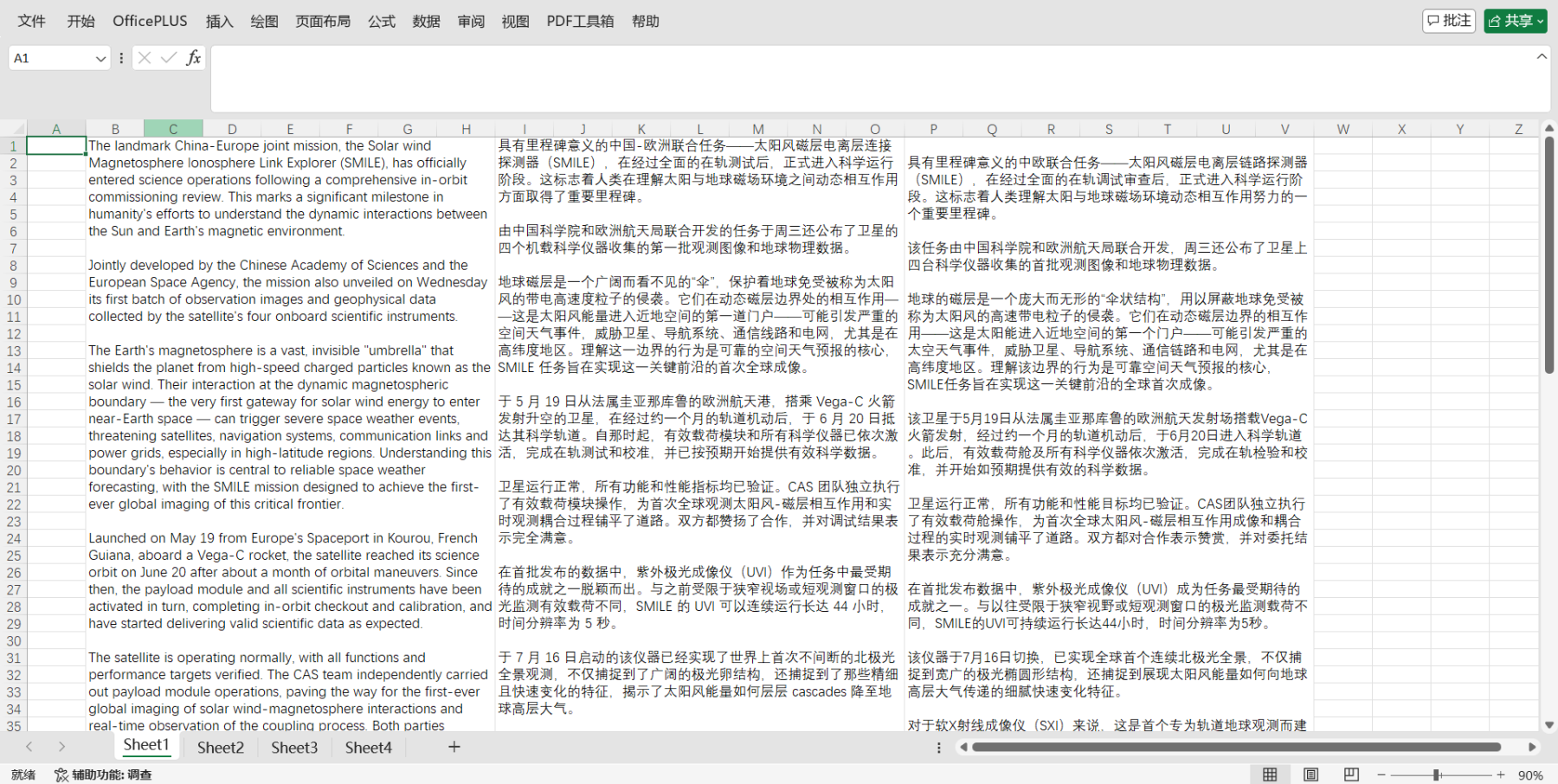
The assignment for the first class was to translate the Chinese content of an article with two translation models and organize the results. In essence, all I did was copy the web page content into a spreadsheet. The text was crammed into a single cell and could not be compared or analyzed directly, so I had to scan back and forth through a dense block of text to check for omissions. A single article already contains a good deal of text, let alone a thousand of them; reading everything through by hand would be hopeless. So our instructor taught us to look for abstracts: an abstract is a highly condensed summary of the whole text, and to grasp the abstract is to grasp the core of the article.
Once we had mastered this method, Professor Li had us try using code to scrape the abstracts of forty articles on a website that came with XML files. An operation that would have had to be repeated dozens of times could, once we had learned how to open developer mode, locate elements and paste in paths, be completed in bulk with a short piece of code.
The scraped abstracts were still continuous passages of text, stacked up in a spreadsheet. But in processing natural language, the first thing to understand is segmentation. Our instructor guided us to use different methods to have AI split the abstracts into sentences, unpacking the parallel, stacked spreadsheet layer by layer and breaking long paragraphs into individual sentences. The segmentation itself is not hard; the hard part is stating the criteria for it clearly. When processing language, AI is in fact a “black box”, and the quality of its output depends entirely on how clear the instructions are. Once the requirements for splitting sentences are not made clear, the source text and the translation will fall out of alignment or even lose content.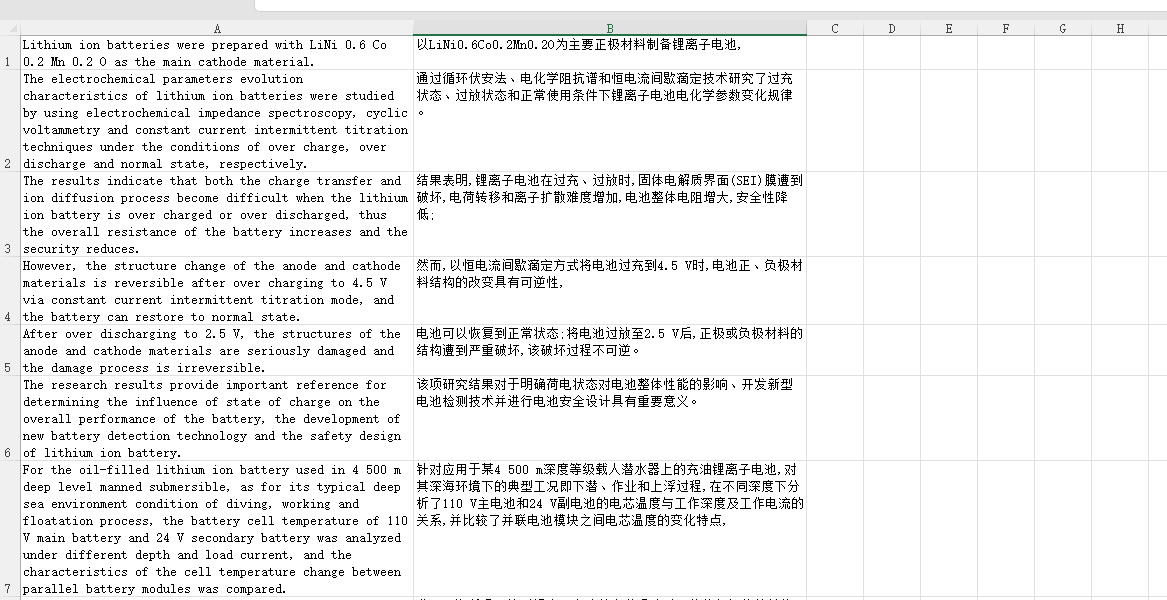
The third assignment was to scrape over a thousand abstracts from the entire website and keep only those related to the theme of “photovoltaics and energy storage”. Together with us, our instructor first compiled a keyword bank around the theme, and then we wrote code to have the program carry out the filtering automatically. This time, I no longer stuffed the filtered content haphazardly into a single cell. Instead, using the splitting techniques I had learned, I divided the articles into sentences in sequence and placed each sentence in a separate cell. The source text and the translation corresponded one to one in the spreadsheet, which made comparison clear and intuitive. Missing words and sentences could be spotted at a glance, and selecting and revising became extremely easy.
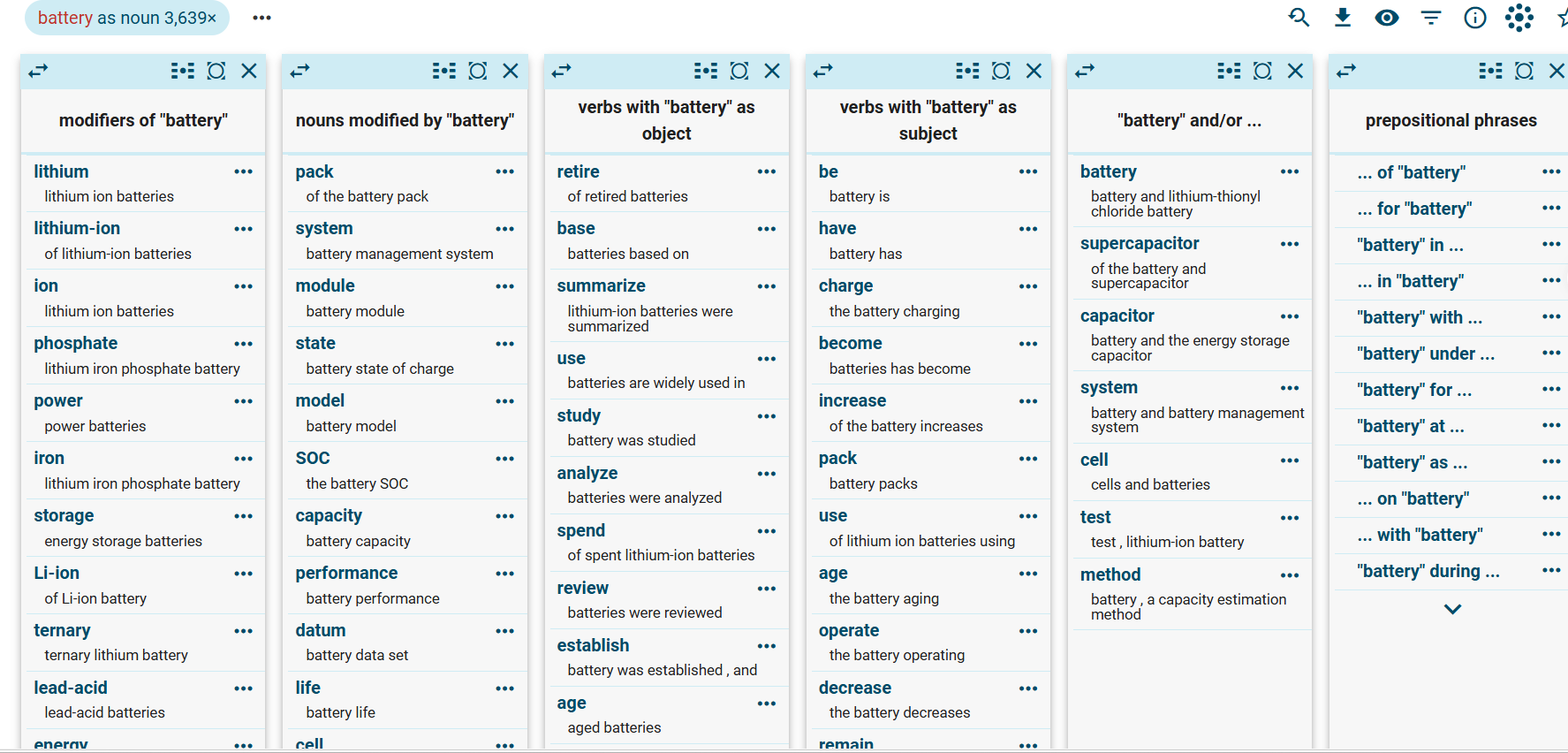
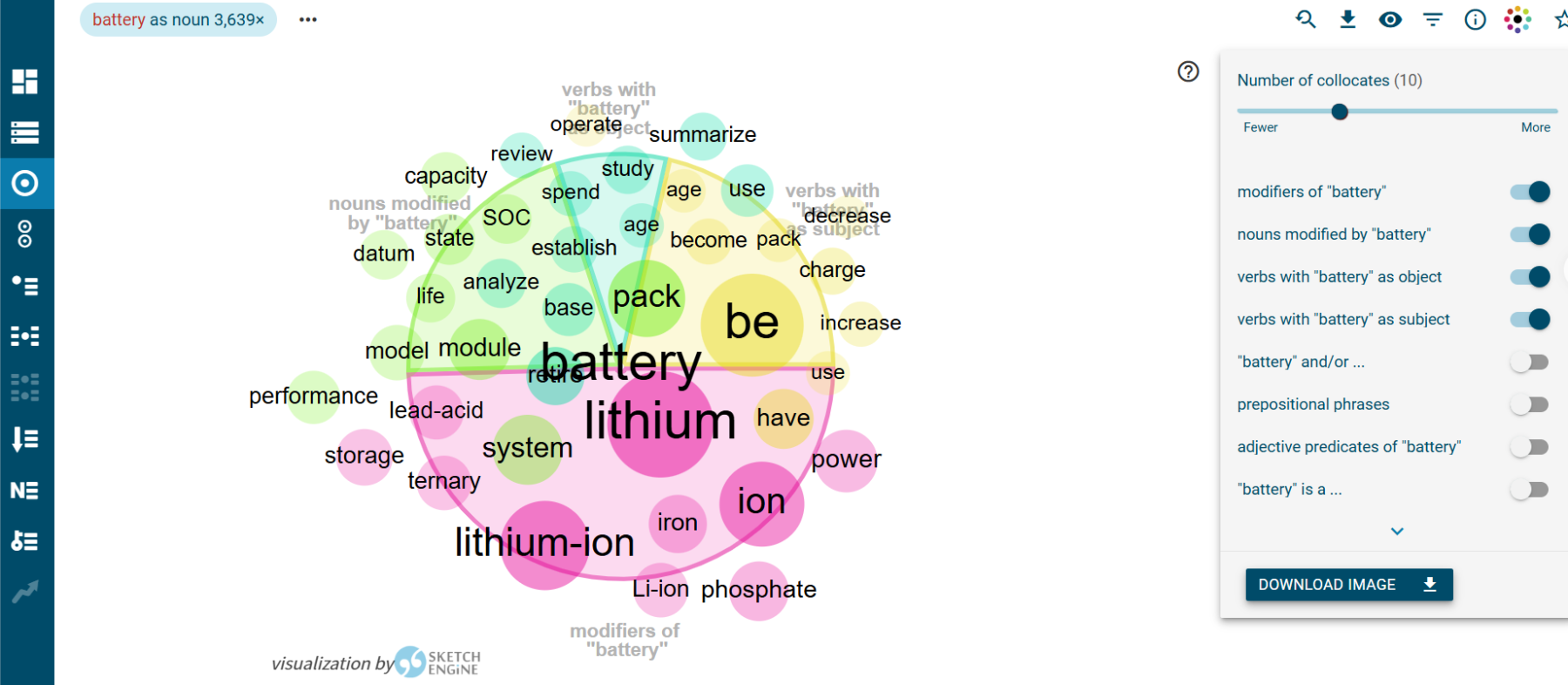
After proofreading, I imported the cleaned text into a corpus tool, turning it from a static spreadsheet into a dynamic corpus that could be queried and analyzed. The tool can count, summarize, compare and visualize, turning regularities in language that are invisible to the naked eye into graphics that can be observed. Ordinarily, our reading of texts is linear: we can read only one at a time, and what we remember once we finish is the content. Corpus analysis, by contrast, is three-dimensional. It processes all the texts at once, and what we see is structure, such as which words always occur together, or what semantic space each of two near-synonyms occupies. This bird’s-eye view is something that reading text by text can never provide.
The rhythm of the course was “principles first, then hands-on practice”. After explaining the basic principles of natural language processing, our instructor had us work through each step ourselves, and walked around the classroom, keeping track of every student’s progress. When a student had used a sound method, he would invite them to share their experience, and the group assignments also taught me many practical techniques. What left the deepest impression was a time when we were stuck for a long while at the text download stage: the Python code simply would not run, and the screen was full of error messages. Professor Li quickly found the problem, and after a key plug-in was installed the code ran immediately. The multithreaded scraping approach also meant that data that would otherwise have taken hours to process was cleaned and aligned in just a few minutes.
The greatest gain from this course was not merely learning how to operate code and models, but acquiring a new way of looking at problems. AI-assisted translation does not mean handing language over to a machine to “translate”; it means using clear instructions to have the machine do for us the counting, comparison and summarizing that are beyond human effort.